
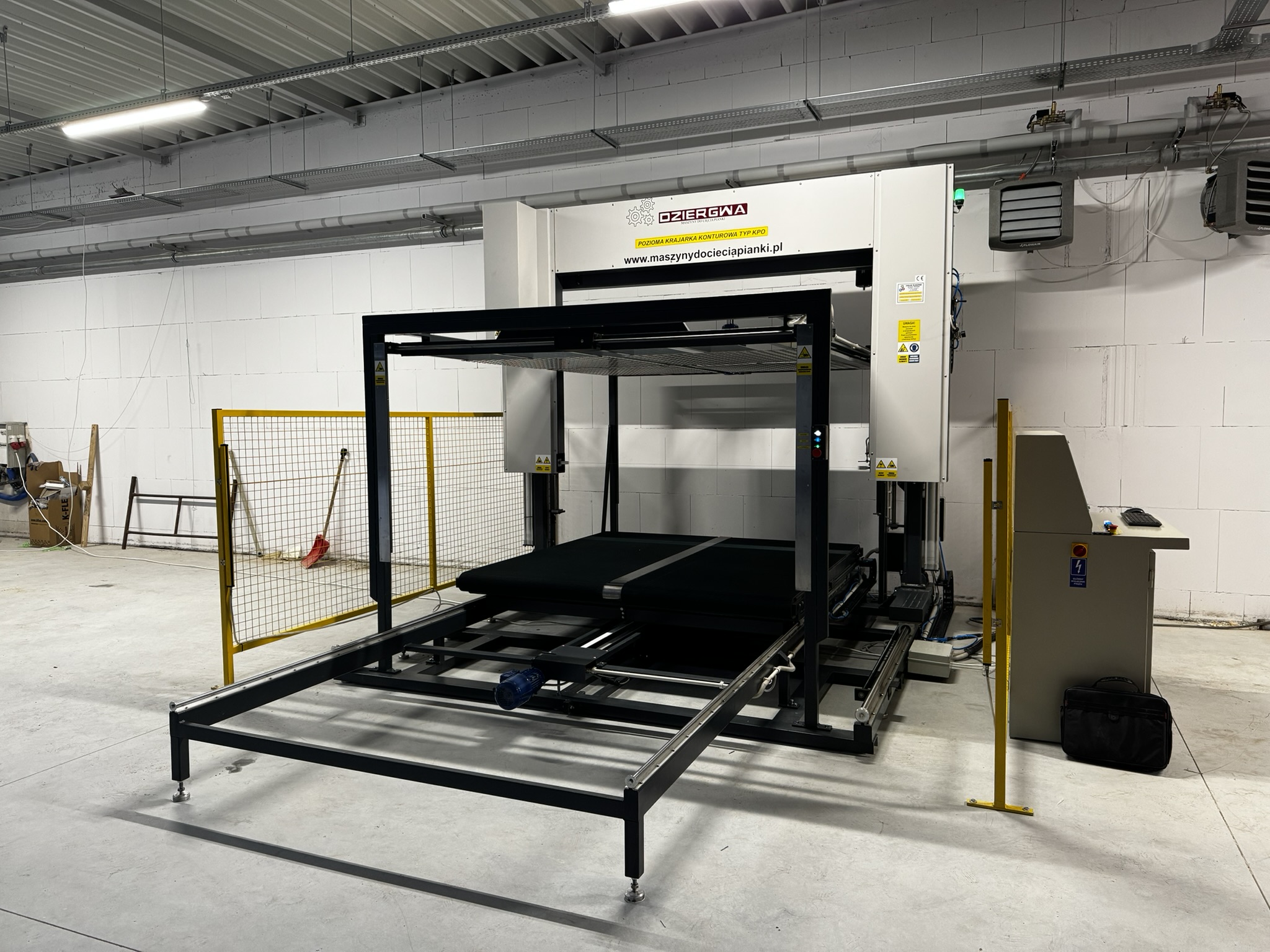
TL;DR: Real foam-cutter throughput depends on machine type and material. A horizontal cutter processes 6–12 blocks per hour, a vertical cutter 8–15, and an automated line 20+ blocks/h. Throughput is driven not only by the machine but by loading time, the number of cuts per block, foam density and the level of measurement automation. When planning production, effective throughput matters — not the cutting speed alone.
How many foam blocks can a cutter process per hour?
A standard DZIERGWA horizontal cutter (PARK series) processes 6–12 foam blocks per hour, and a vertical one (PPA) 8–15 — depending on the number of layers and blank size. These are real figures that include loading and positioning, not just blade movement. An automatic line with a feeder and digital measurement reaches 20+ blocks per hour by removing the manual steps between cuts.
What really drives foam cutting throughput?
Throughput is driven by the sum of auxiliary times — loading, measuring and unloading — not by blade feed speed. Five main factors:
1. Measurement automation — digital stops and feeders can halve the time between cuts.
2. Number of cuts per block — more layers means fewer blocks/h.
3. Foam density — harder foam requires slower feed.
4. Loading organization — manually positioning a block can take longer than the cut itself.
5. Blade condition — a dull blade forces slower feed.
How to increase throughput without changing the machine?
The fastest gain comes from organizing the logistics around the machine and keeping the blade sharp — often with no new machine at all. Practical steps:
- group orders of the same size (fewer changeovers),
- keep a buffer of blocks at the machine,
- replace the blade on schedule, before it goes dull,
- consider adding a feeder or an unloading table.
Indicative throughput by machine type
- Horizontal cutter (PARK) — Blocks/h: 6–12; Automation: partial
- Vertical cutter (PPA) — Blocks/h: 8–15; Automation: partial/full
- Automatic line — Blocks/h: 20+; Automation: full
FAQ
Is the stated throughput the cutting speed? No. It is effective throughput — it includes loading, measuring and unloading. The blade speed itself is higher, but in practice the whole cycle counts.
How does the number of layers affect throughput? The more cuts from one block, the fewer blocks per hour but the more finished sheets. Throughput is always stated in the context of the product mix.
When is an automatic line worth it over a single cutter? When production is repetitive and exceeds a dozen or so blocks per day — automated measuring and feeding pays back through saved operator time.
Planning to increase output? We will match the machine to your throughput — see the DZIERGWA automatic machines or contact us.
Contact us — we'll be happy to advise and prepare an offer tailored to your needs!