
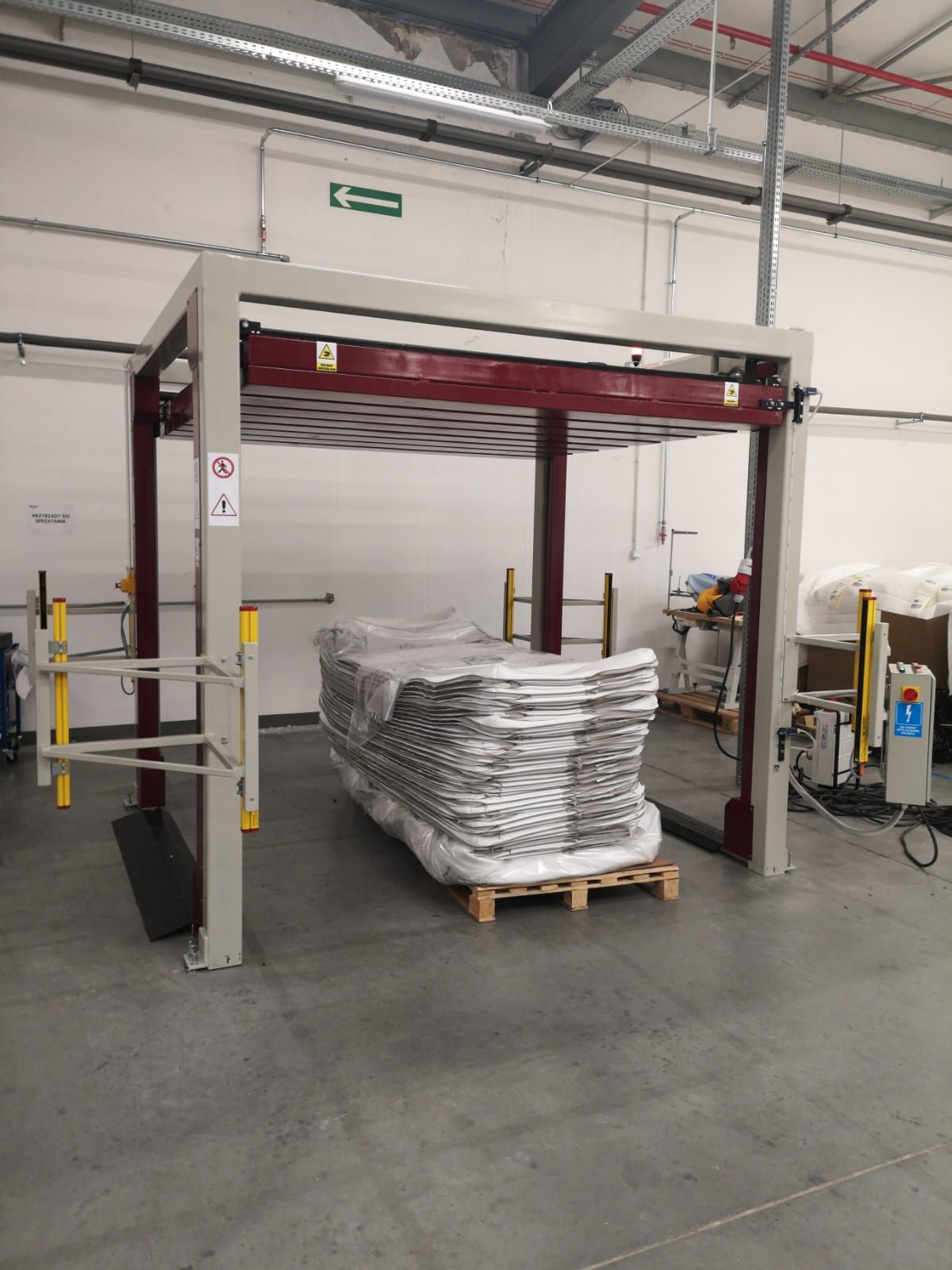
TL;DR: Compressing foam waste is a logistics process that completes the material flow in the plant - from the collection of scraps at the cutting machines, through compression, to palletization and shipment of bales. A well-designed flow shortens the waste path, frees up the hall space, reduces the number of transport trips and reduces volume-based disposal fees. It's not just a machine - it's a way of organizing work that translates into real savings and a smaller environmental footprint.
Pressing waste foam as an element of plant logistics
In the production plant, polyurethane foam offcuts are created at every cutting stage - blocks divided into slices, horizontal sheets, contour cuts. Each of these operations generates from a dozen to even 30% of waste in the form of cuttings and leftovers. The problem is not the mass, but the volume of loose material that lies around the machines, wanders around the hall in bags and blocks space in the warehouse.
Compacting waste foam turns this chaotic stream into an orderly, repeatable process. Instead of moving full bags of "air" around the hall, the operator collects the clippings at designated points and periodically compresses them into compact bales of a fixed format. Internal logistics becomes predictable and costs become quantifiable.
The key difference from the case-by-case approach: compaction integrates waste into the plant's regular rhythm, so it doesn't accumulate to the point where it begins to interfere with production.
What does the material flow look like - step by step
Well-organized pressing of foam waste is based on four stages:
1. Cutting and generation of scraps - on vertical and horizontal machines and contour cutters, waste is generated in predictable places.
2. Collection at source - a container, big-bag or haul-off device is placed next to each machine so that the clippings do not wander loose around the hall.
3. Compression - the operator empties the collection into the press chamber at constant intervals; the piston crushes the material and the finished bale is tied and placed on a pallet.
4. Palletizing and shipping - bales of repeatable dimensions are placed on pallets, ready to be picked up by a recycler or waste disposal company.
The shorter and simpler this path, the less human work and the less space waste takes up at each stage. The technical details of the device itself are described in the article about foam waste press.
Savings from compressing waste foam
An orderly process translates into specific items in the plant's budget:
- External transport - loose foam fills the trailer before it reaches the load limit. Compressed bales allow you to load many times more material into one course.
- Utilization - waste collection companies often charge per container or volume, not per kilogram. Less volume means lower texture.
- Hall area - compact bales on a pallet take up a fraction of the space occupied by bags of loose clippings. Reclaimed space can produce.
- Internal logistics - less transport with trolleys, fewer trips around the hall, fewer man-hours for moving waste.
Annual savings on logistics and disposal usually range from several to several thousand zlotys, and in large-volume plants - much more. This is why compressing waste foam is increasingly treated as a standard element of equipment, not an addition.
Closing the material flow
The greatest value comes from connecting pressing to a wider raw material circulation. Some of the shredded offcuts can be returned to production as filling - this is where the pillow stuffer comes in handy, as it uses the foam at the source. The remaining material, compressed into homogeneous bales, is sent to the collection point as a full-value secondary raw material. The cycle closes inside the plant and the amount of waste going outside decreases.
Ecology and environmental requirements
Pressing waste foam is not only economic, but also environmental. Fewer transport trips mean lower CO2 emissions related to waste disposal. Homogeneous bales are easier to recycle - they go to the production of regranulated foam, mats or underlays, instead of being sent to a landfill.
For the plant, it also means it is easier to demonstrate compliance with waste management requirements:
- Smaller waste stream sent for disposal.
- Higher share of recycling in the company's environmental balance.
- Clear documentation - repeatable, weighed bales are easier to settle and document than loose, heterogeneous waste.
In the context of growing ESG requirements and environmental reporting, the orderly compaction of foam waste is also becoming an argument in conversations with contractors and auditors.
What to pay attention to when organizing the process
The machine itself is not enough - what matters is how it is integrated into the plant's operation. It is worth taking care of:
- Locating the press close to the machines generating the most waste to shorten the internal transport route.
- Constant pressing rhythm - designated hours or thresholds for filling containers so that waste does not accumulate chaotically.
- Repeatable bale format adapted to pallets and trailers, which maximizes the use of transport space.
- Selection according to the volume - the press must keep up with the actual amount of cuttings from the entire machine park.
When planning the process, it is worth combining it with the selection of cutting machines - the guide how to choose a foam cutting machine will be helpful, because the type and efficiency of the cutting machines determine how much and what kind of waste will have to be managed.
Summary
Compressing waste foam is primarily a matter of logistics: organizing the flow of scraps from cutting to shipping. A well-designed process shortens the waste path, frees up the hall space, reduces the number of trips and disposal fees, and at the same time improves the plant's environmental balance. It is an investment that organizes everyday work and translates into measurable savings.
Do you want to organize waste circulation in your plant? Contact DZIERGWA - as a Polish manufacturer of foam cutting machines, we will help you plan the pressing process to suit your volume and machinery.
Contact us — we'll be happy to advise and prepare an offer tailored to your needs!