
TL;DR: The selection of upholstery foam depends on the density (kg/m³) and hardness (ILD or kPa). The seats require 30–45 kg/m³ foam with a hardness of 25–50 N, the backrests require 20–30 kg/m³. The quality of the foam directly affects the life of the furniture and the comfort of use.
What is foam density and why does it matter?
Foam density (expressed in kg/m³) is the mass of one cubic meter of material. The higher the density, the:
- Longer foam life (slower loss of elasticity)
- Better resistance to permanent deformation
- Higher material cost
20 kg/m³ foam in cheap sofas loses its elasticity after 2-3 years of intensive use. 40 kg/m³ foam retains its properties for 8–15 years.
What is foam hardness?
ILD Hardness (Indentation Load Deflection) measures the force required to press a 25% test plate into a 100 mm thick material. Expressed in N (newtons) or lbs.
Hardness kPa (kilopascals) - European standard. Conversion: 1 kPa ≈ 10 N ILD (approximate).
Hardnesses for various applications:
- Very soft (memory foam): ILD 8–15 N
- Soft (backrests, pillows): ILD 15–25 N
- Medium (standard seats): ILD 25–40 N
- Hard (premium seats, public seating): ILD 40–60 N
- Very hard (technical foams): ILD 60+ N
Table for selecting foam for furniture elements
Sofa seat (daily use):
- Density: 35–45 kg/m³
- ILD hardness: 30–45 N
- Thickness: 80–120 mm
Office chair seat:
- Density: 40–50 kg/m³ (high durability)
- ILD hardness: 35–50 N
- Thickness: 60–80 mm
Sofa backrest:
- Density: 20–28 kg/m³
- ILD hardness: 15–25 N
- Thickness: 40–80 mm
Headrest:
- HR foam or memory foam
- Density: 40–55 kg/m³
- Thickness: 50–100 mm
Mattress insert (comfort zone):
- Density: 30–40 kg/m³
- Hardness: soft to medium
- Thickness: 20–50 mm
Types of upholstery foams
Standard foam (conventional PUR):
The most popular and cheapest. Densities 18–45 kg/m³. Good elasticity, easy to machine. Available in a wide range of hardnesses.
HR Foam (High Resilience):
Higher elastic recovery than conventional foam. The foam particles have a spherical structure (cell structure). Better ventilation and durability. Density 28–50 kg/m³.
Memory foam (viscoelastic):
Temperature-dependent - hardens at low temperatures, softening in contact with body heat. Used in comfort layers of mattresses and pillows. Slow return after pressing - characteristic imprint effect.
Latex foam:
Natural or synthetic. High elasticity, resistant to dust mites, more expensive than PUR. Used in premium mattresses and in medicine.
How to cut upholstery foam precisely?
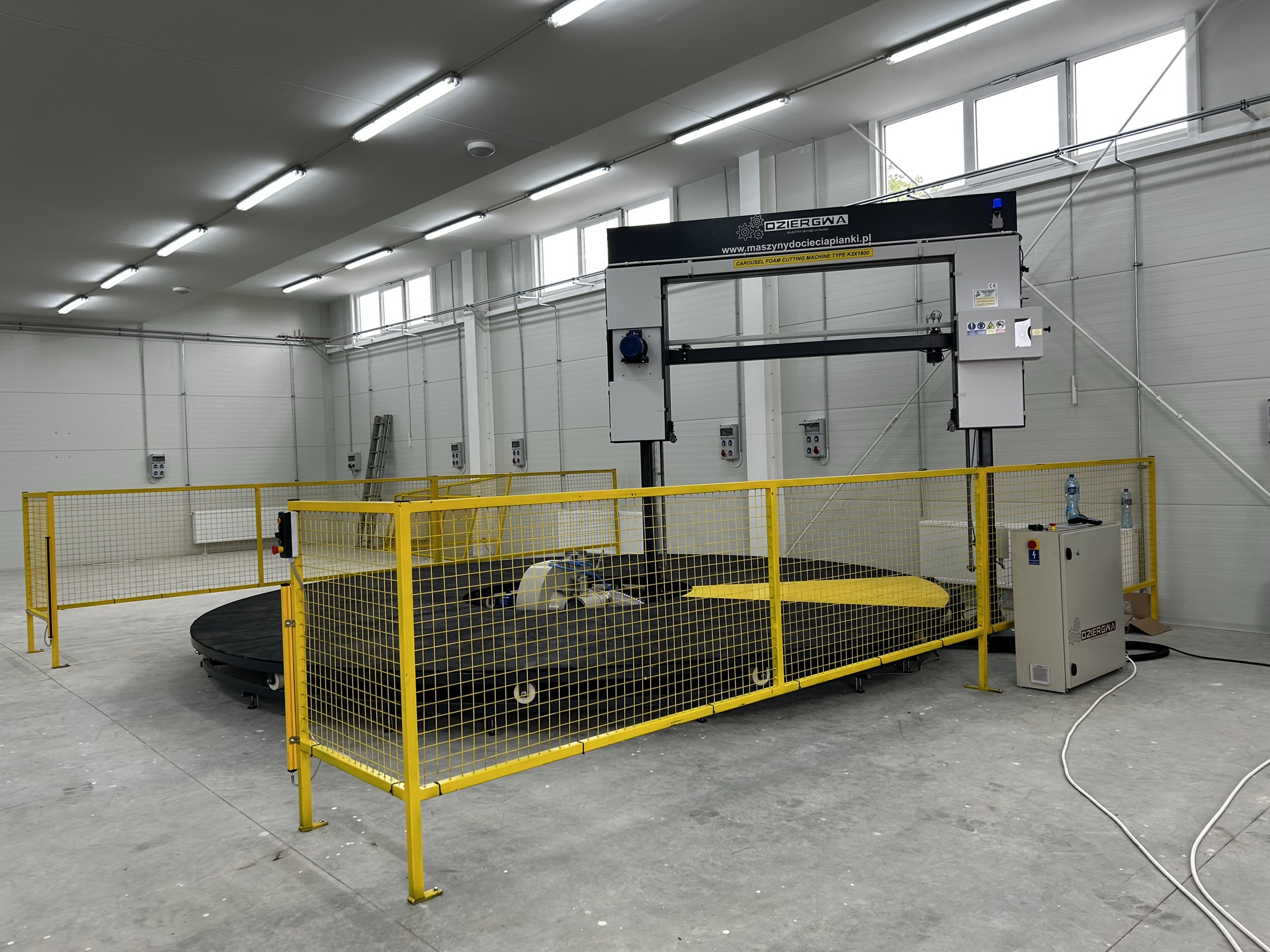
All types of upholstery foams can be cut with DZIERGWA machines. Memory foam requires a lower feed speed due to different rheological properties - the CNC controller allows you to precisely set the appropriate parameters.
A horizontal cutter is intended for cutting thin sheets (comfort layers 7-20 mm) - details: Horizontal foam cutter. For thicker seat and backrest elements - PPA vertical cutter.
Frequently asked questions (FAQ)
How to recognize poor quality upholstery foam in furniture?
Signs of low quality: the foam quickly loses its shape after sitting, visible dents after a few months of use, crumbling of the material at the edges. The cause is usually too low density (below 20 kg/m³).
Is the same foam suitable for a mattress and a sofa?
Not necessarily. The mattress requires foam with a minimum density of 25-30 kg/m³ and health certificates (no VOC emissions). Sofa foam may be cheaper, but it should not have a density below 25 kg/m³ for everyday use.
How many years does 40 kg/m³ foam in a sofa last?
With daily use, 40 kg/m³ foam retains its properties for 10-15 years. EN 1021 (resistance to inflammation) and EN 1334 (hardness) are standard certificates for upholstery foams.
Contact us — we'll be happy to advise and prepare an offer tailored to your needs!