
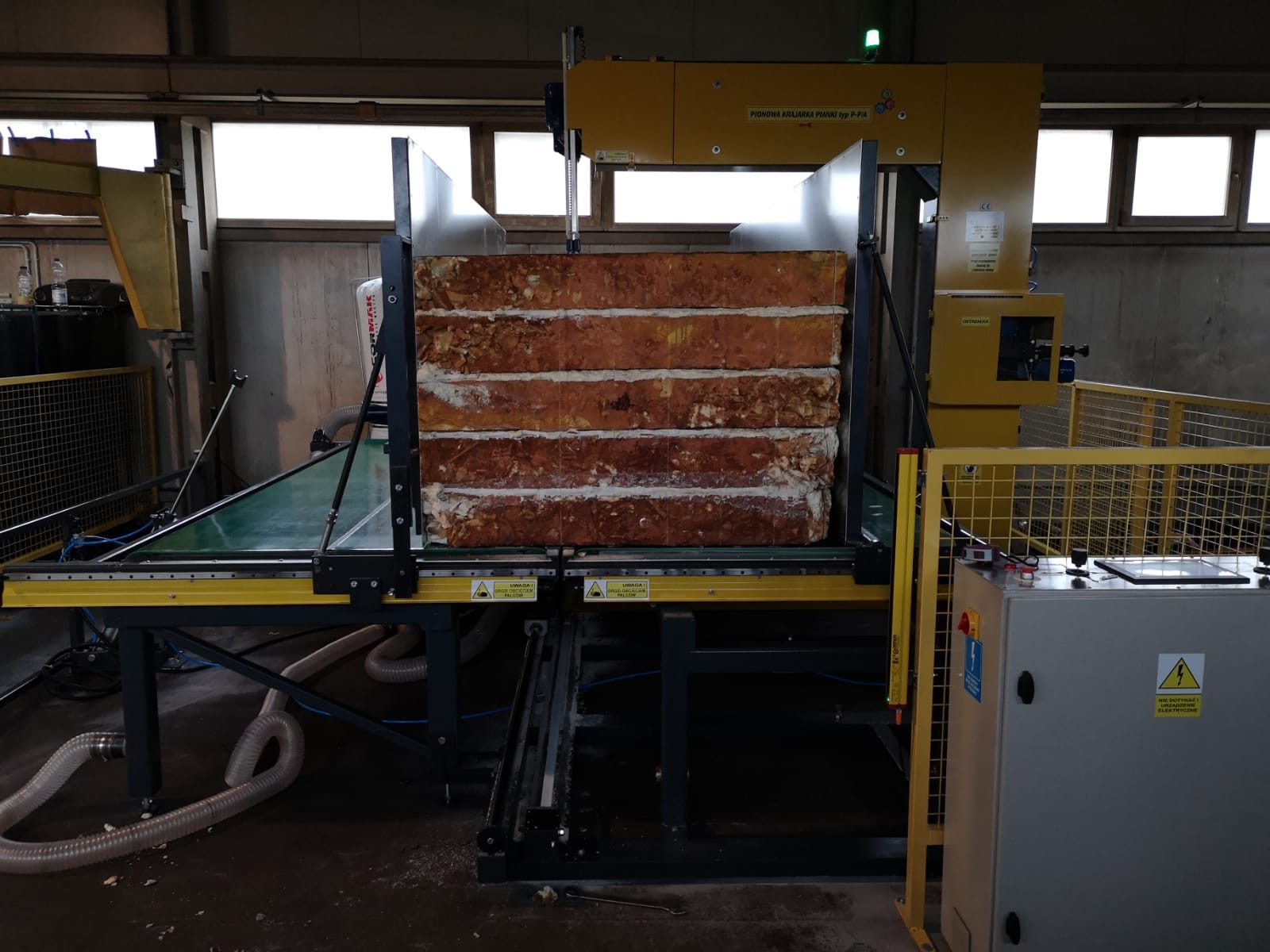
TL;DR: Cutting foam releases fine dust and offcuts that must be captured by local extraction with a filter placed as close as possible to the cutting zone. A well-designed workstation combines extraction at the blade, a filter (bag or cartridge) and an offcut container. This improves safety, hall cleanliness and machine life. PUR foam dust is flammable, so the extraction system should be grounded and cleaned regularly.
Why does foam cutting need extraction?
Foam cutting produces fine dust and light offcuts that float in the air, settle on the machine and worsen working conditions — which is why they need local extraction. Polyurethane foam dust is light and spreads easily, and as an organic material it is flammable. Without extraction, offcuts build up in the guides and the sharpening mechanism, accelerating machine wear and raising the fire risk. Extraction is both a safety and a maintenance element.
How to set up an extraction workstation?
An effective cutting station has extraction placed right at the blade zone, a filter to capture the dust and a separate container for larger offcuts. The basic elements of the system:
1. Suction hood at the cutting zone — the closer to the blade, the higher the capture efficiency.
2. Extraction ducts — smooth, correctly sized, without sharp bends.
3. Filter (bag or cartridge) — retains fine dust before the air is exhausted.
4. Offcut container — for collecting larger foam waste.
5. Grounding and cleaning — reducing fire and electrostatic risk.
What to do with foam dust and offcuts?
Collected foam dust and offcuts are best handled by recycling or compacting in a waste press — rather than thrown out as mixed waste. PUR offcuts can be shredded and used to make recycled foam (rebond, agglomerate board). Compacting in a press reduces waste volume several times over, cutting transport and storage costs. This closes the loop on a clean, economical workstation.
Workstation elements and their role
- Extraction at the blade — Role: capture dust at source; Result: cleaner air, fewer deposits
- Bag/cartridge filter — Role: retain fine particles; Result: compliance and hygiene
- Offcut container — Role: collect larger waste; Result: tidy workstation
- Waste press — Role: compact offcuts; Result: lower transport cost
FAQ
Is foam dust dangerous? It is flammable and airborne, so it requires extraction, a grounded system and regular cleaning. Where dust is heavy, the operator should use respiratory protection.
Which filter should I choose for foam dust? Bag or cartridge filters sized to the extraction capacity work well. Regular cleaning or cartridge replacement is essential.
What to do with foam offcuts? Best to recycle them (rebond, agglomerate) or compact them in a waste press, which lowers cost and closes the material loop.
Want to organize your cutting station and waste? See the DZIERGWA presses and auxiliary equipment or write to us.
Contact us — we'll be happy to advise and prepare an offer tailored to your needs!