
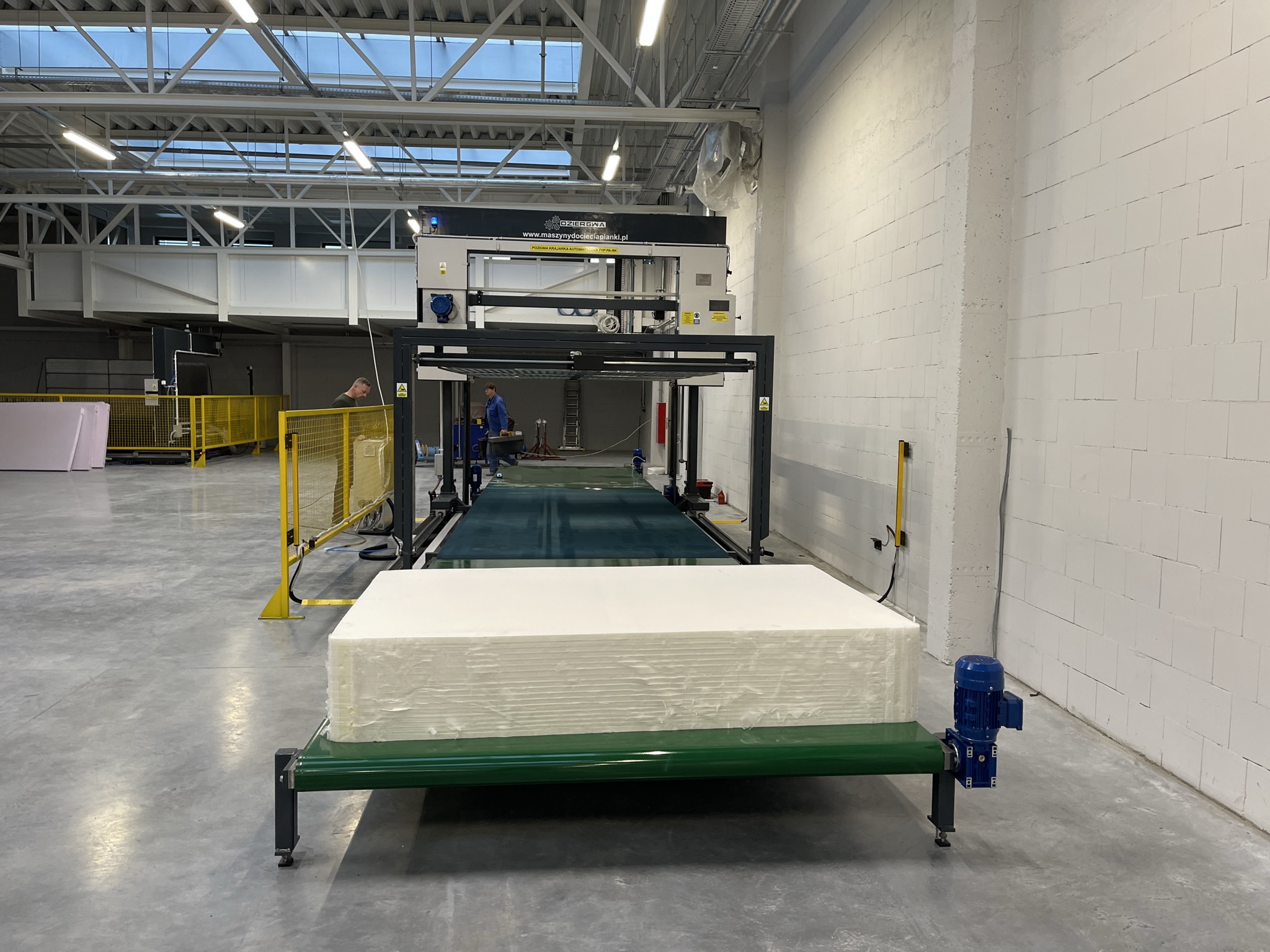
TL;DR: Regular maintenance of the foam cutter costs several dozen minutes a week in replacement for many years of failure-free operation of the machine. Key points: daily check of the knife and belt tension, weekly lubrication of the guides, monthly inspection of the pneumatic system and annual technical inspection.
Why is foam cutter maintenance so important?
The foam cutter operates in difficult conditions - foam dust, fine fibers and waste accumulate in the guides, on the drive belts and in the control cabinet filters. Neglected maintenance leads to:
- Reduced cutting precision - worn bearings and dirty guides cause dimension deviations
- Accelerated knife wear - improper tension shortens the life of the cutting band
- CNC controller failure - dust in the electrical cabinet causes overheating and damage to the electronics
- Costly downtime - an unplanned failure during peak production results in losses many times higher than the cost of maintenance
Daily checklist - 10 minutes
- Check band knife tension - whether automatic pneumatic tension is active
- Check the knife condition - no cracks, nicks, excessive wear
- Check smooth movement of the sides - without resistance or jerking
- Clean the cutting zone of any remaining foam and dust
- Check the air pressure level in the pneumatic system (typically 6 bar)
- Make sure that the emergency stop switches (e-stop) are unlocked and operational
Weekly checklist - 30 minutes
- Lubricate the linear bearings of the side guides and the cutting body (LV lithium grease or in accordance with the machine's operating instructions)
- Check the tension of the timing belts - the belts should be neither too loose nor too tight
- Clean the air filter in the CNC control cabinet
- Check the condition of the pneumatic seals - no air leaks when pressed
- Check the correctness of the cutting dimensions by making a test cut and measuring with a caliper
Monthly checklist - 1-2 hours
- Full inspection of linear guides - cleaning, lubrication, clearance check
- Check the ball or trapezoidal screws of the Z axis (cutting body height) - lubrication monthly
- Inspection of the electrical system - condition of cables, terminals, frequency converters
- Check belt conveyor - belt condition, tension, alignment
- Verify the dimensional calibration of the CNC controller - comparison of the set and actual dimensions
- Replace the band knife if it shows cracks or excessive tooth wear
Annual technical inspection - DZIERGWA service
It is best to commission the annual inspection to the manufacturer's service center. DZIRGWA technicians check:
- Condition and geometry of the entire machine frame
- Linear and ball bearings - clearance measurement, replacement if necessary
- Mechanical and electrical condition of drive motors
- CNC software update
- Full calibration and checking of cutting precision
- Review of machine documentation and CE certificates
The most common causes of cutter failure
- Band knife breakage - too much stress or material fatigue; solution: regular inspection and replacement according to schedule
- Increase in guide resistance - lack of lubrication; solution: weekly lubrication
- Cutting dimension errors - loose ball screws or knife defects; solution: knife calibration and verification
- CNC controller overheating - air filter clogged; solution: weekly filter cleaning
DZIRGWA service support
DZIERGWA provides full service support:
- Warranty and post-warranty service - quick response time
- AnyDesk remote diagnostics - analyze and repair CNC software problems without a technician visit
- WhatsApp (+48 723 882 783) - quick consultation with a photo or recording of the problem
- Spare parts in stock - minimal downtime
Frequently asked questions (FAQ)
How often should the band knife in a PPA cutter be replaced?
The frequency depends on the intensity of production and the hardness of the foam. Typically, the knife is replaced every 2–8 weeks. Symptoms of wear include deterioration of cutting quality (jagged edges) or visible fatigue cracks.
Can I do the annual inspection myself?
Basic activities yes. However, full geometric calibration and bearing condition assessment require specialized tools and knowledge. We recommend inspection by a certified DZIERGWA service at least once a year.
Contact us — we'll be happy to advise and prepare an offer tailored to your needs!