
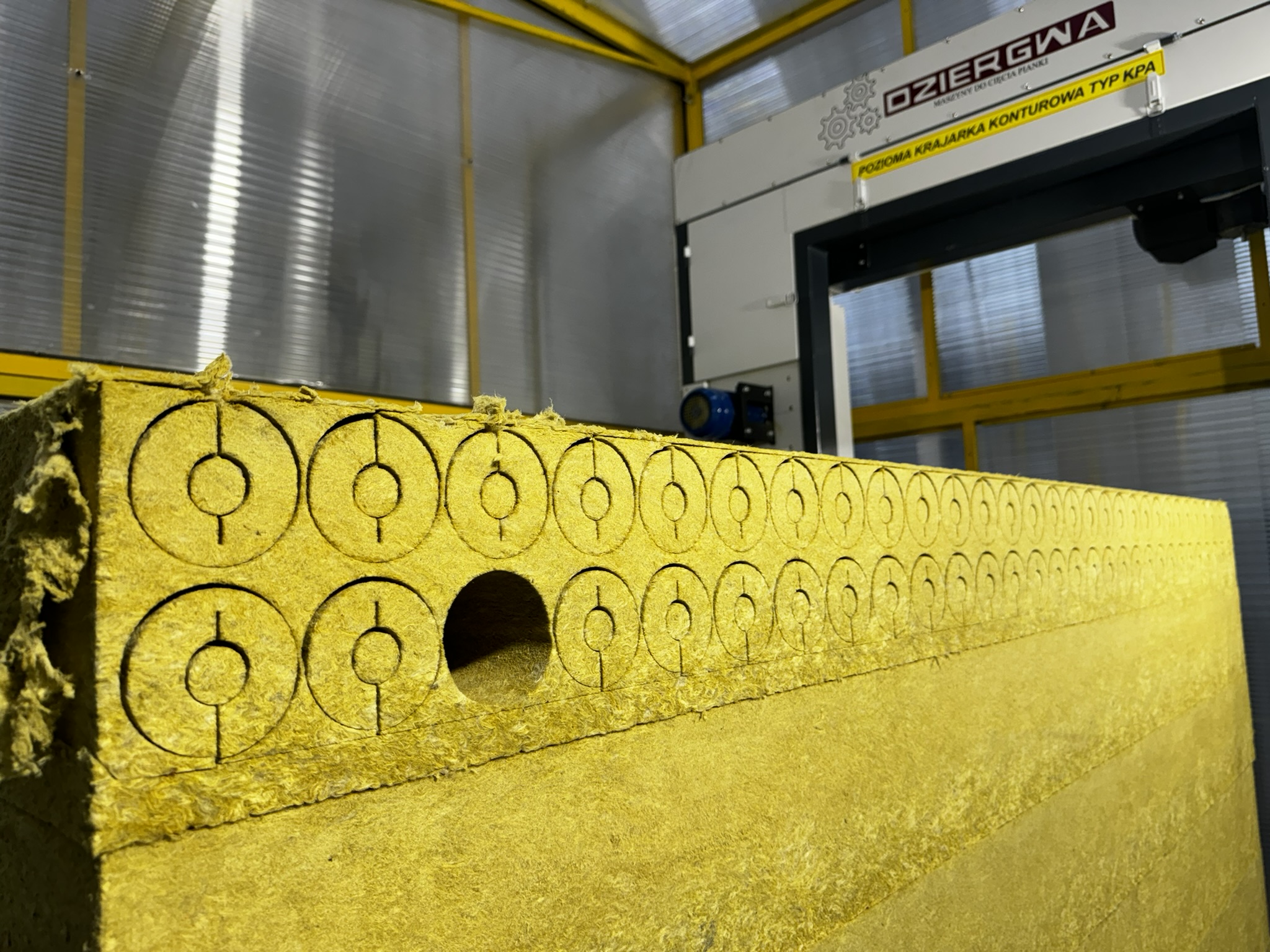
TL;DR: Effective cutting of mineral wool depends on three things: selected parameters (feed speed, tension and blade type according to the density of the material), dust control (extraction at the source + personal protective equipment) and proper knife drive. A machine for cutting mineral wool must have hard, abrasion-resistant blades and reinforced mechanics - otherwise the edge will be jagged and the operating costs will be high. Below are practical settings, health and safety rules and criteria for selecting a cutter.
Cutting parameters - what they depend on
The selection of parameters when cutting mineral wool starts with the density and hardness of the material. Light glass wool (approx. 11–30 kg/m³) behaves completely differently than dense facade stone wool (100–200 kg/m³). The denser the material, the more resistance it offers to the blade and the slower, more controlled the feed must be.
The most important parameters controlled by the operator of the mineral wool cutting machine are:
- feed speed - slower for dense stone wool, faster for light glass wool; too fast feed tears out the fibers and gives a jagged edge,
- knife tension and speed - reinforced, pneumatic tension maintains the cutting geometry, and the stable blade speed prevents the knife from being pulled off in dense material,
- cutting thickness and format - different settings are used when dividing a block into plates and different when cutting thin sheets,
- accuracy - DZIERGWA machines maintain repeatability of ±1–2 mm, which translates into tightness of installation in the case of insulation.
In practice, the parameters are selected experimentally for a specific product range and then saved as a program in the controller - thanks to this, subsequent batches are cut identically.
Selection of blades according to the density of the material
Mineral fibers act like sandpaper, so the selection of blades is a key technical and cost decision. Wool blades are a consumable material with a shorter lifespan than foam blades - what matters is their abrasion resistance and ease of replacement.
Types of blades and when to use them
- Band knife with a hard, serrated blade - universal for straight cutting of boards and blocks, copes well with fiber abrasion,
- Oscillating knife - works well for more demanding cuts and shapes where a clean edge is important,
- Abrasion-resistant (hardened) blades - extends the replacement interval for dense stone wool.
Rule of thumb: the denser and harder the material, the harder the blade and the slower the feed. You can recognize a dull blade by more dust than usual, a jagged edge and increasing feed resistance - this is a signal to replace it before the quality of the product suffers.
Health and safety - dust and operator protection
Cutting mineral wool releases irritating dust that irritates the respiratory tract, eyes and skin. Health and safety rules are not an option here, but a requirement - they concern both the operator's health and the durability of the machine, because abrasive dust settles on the guides and bearings.
Basic elements of safe workplace organization:
- dust extraction at the source - hood or spigot at the cutting zone connected to the filtering installation, collecting dust before it falls,
- personal protective equipment - dust mask (FFP class), glasses, gloves and long-sleeved clothing,
- mechanics covers and seals - protect linear guides and drives against the penetration of abrasive particles,
- tidiness and cleaning - regular dust removal and proper storage of cuttings and waste.
A well-designed mineral wool cutting machine treats extraction as a structural element, not an addition. A more extensive discussion of the structure itself and the protection of the mechanics can be found in the article about mineral wool cutting machine.
Machine selection - practical criteria
When choosing a wool cutter, compare it with the actual material and production volume. The most important criteria:
- type of wool - rock or glass, and the density range that you actually cut,
- cutting type - straight sheets, dividing the block into thicknesses or shapes,
- efficiency - single elements or continuous operation with a belt conveyor,
- range of extraction and covers - adjusted to the dust level,
- service and blade availability - predictable operating cost.
If you are just sorting out your requirements, a general guide how to choose a foam cutting machine will be helpful - many criteria (performance, format, control) are common, and you impose the specificity of the wool on this framework.
CNC control and repeatability of settings
Once you select the parameters for a given material, the key to mass production is their repeatable reproduction. DZIRGWA machines for mineral wool use CNC control with a touch panel - the operator selects a saved program and the machine maintains the set thickness, feed speed and cutting geometry without deviations between batches.
Thanks to this, the settings set once (e.g. slower feed for dense facade wool) do not require re-tuning. We describe more about the control technology itself in the material about CNC control in cutting machines.
The most common mistakes when cutting wool
- too fast feed for dense material - torn edge and excessive fiber tearing,
- working with a blunt blade - increased dust, resistance and risk of damage to the drive,
- no or clogged extraction - threat to the operator and accelerated wear of the mechanics,
- personal protective equipment omitted - exposure of respiratory tract and skin to dust,
- no saved programs - manual tuning reduces repeatability every time.
Avoiding these mistakes is, in practice, a combination of appropriate parameters, occupational health and safety discipline and good equipment.
Summary and contact
Cutting parameters, blade selection and dust control are the three pillars of effective cutting of mineral wool. Slower feed for dense material, hard and abrasion-resistant blades, effective extraction and personal protective equipment determine the edge quality, safety and operating costs.
DZIERGWA, as a Polish manufacturer, selects the machine, blades, extraction system and settings for a specific material and performance. See mineral wool cutting machines in our offer or contact us - we will help you choose the configuration and parameters for your production.
Contact us — we'll be happy to advise and prepare an offer tailored to your needs!